01
Application
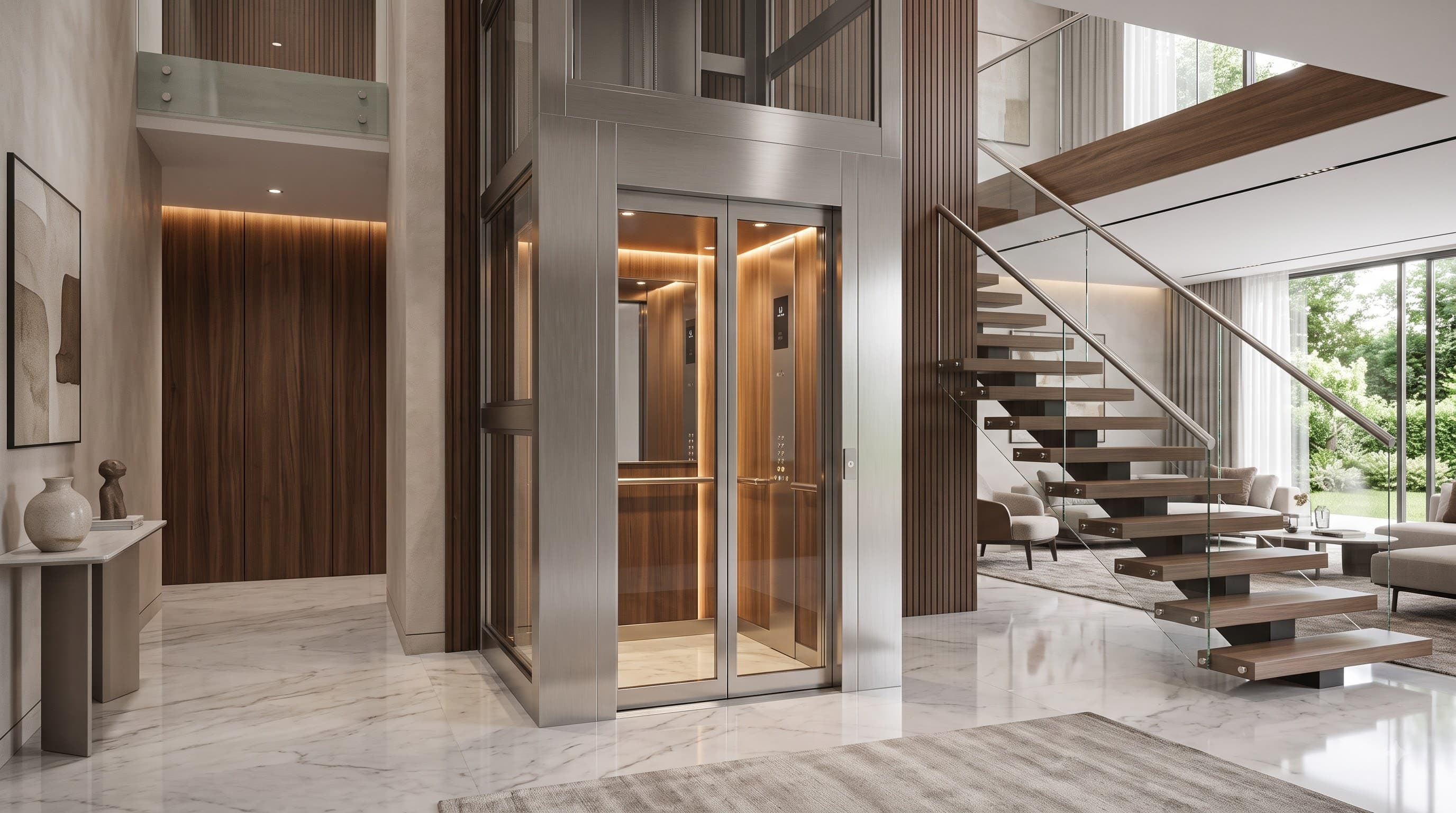
Energy-efficient hydraulic lift systems ideal for low and mid-rise buildings, villas, and commercial spaces with smooth, quiet operation.
View cabin finishes, door configurations, installation details, and product videos from every angle.
Understand the technology, applications, and benefits of this elevator system.
Asco Elevator's hydraulic elevators deliver smooth, powerful vertical travel using advanced hydraulic piston technology — ideal for low-rise buildings up to G+5 floors. Perfect for villas, showrooms, clinics, and small commercial buildings across Chennai, our hydraulic lifts require no machine room, offer low pit depth options (as low as 150mm), and provide exceptionally smooth ride quality. Available in direct-acting and indirect-acting configurations with fully customizable cabin designs. Each unit features inherent safety — safe descent during power failures without electricity, rupture valve protection, and overload prevention.
Engineered for dependable performance, enhanced safety, efficient operation, and long-term reliability across demanding building environments.
Exceptionally smooth and jerk-free ride quality
No machine room required — saves building space
Low pit depth (as low as 150mm) for easy installation
Quiet hydraulic power unit with vibration isolation
Energy-efficient with low power consumption
Safe descent even during power failure
Ideal for retrofitting in existing buildings
Heavy load capacity for diverse applications
Every feature is selected to improve safety, ride quality, energy efficiency, and the long-term performance of your hydraulic elevator.
Standard mechanical specifications for Hydraulic Elevator. All measurements and configurations can be customized to match site shaft parameters.
2–15 Persons (Up to 1500 kg)
0.15 – 0.6 m/s
Up to 18 meters (G+5)
Direct Acting / Indirect Acting Hydraulic
900mm × 900mm to 1500mm × 2000mm
Manual / Auto Telescopic / Center Opening
Single Phase 220V / Three Phase 415V
Check Valve, Rupture Valve, Manual Lowering, ARD
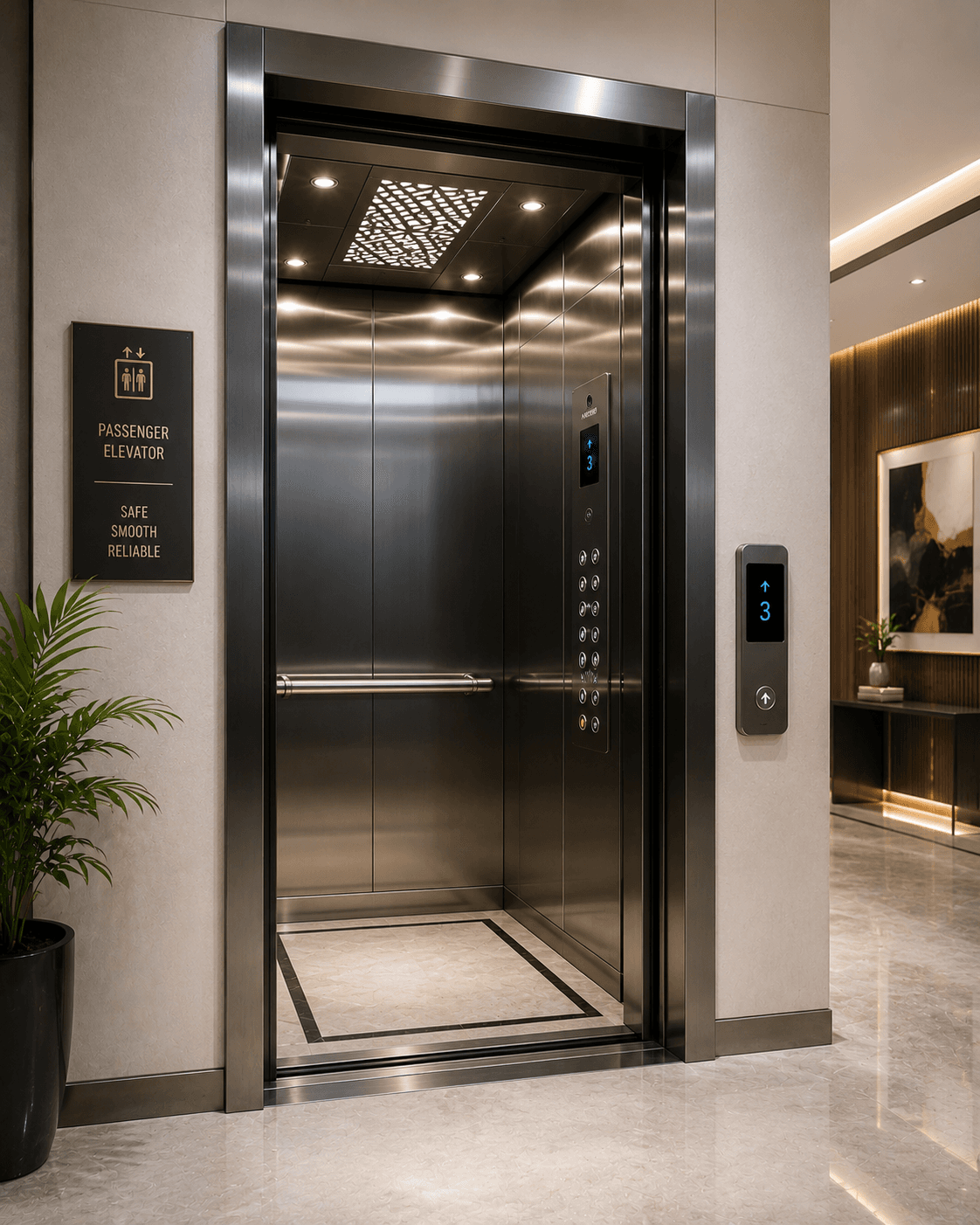
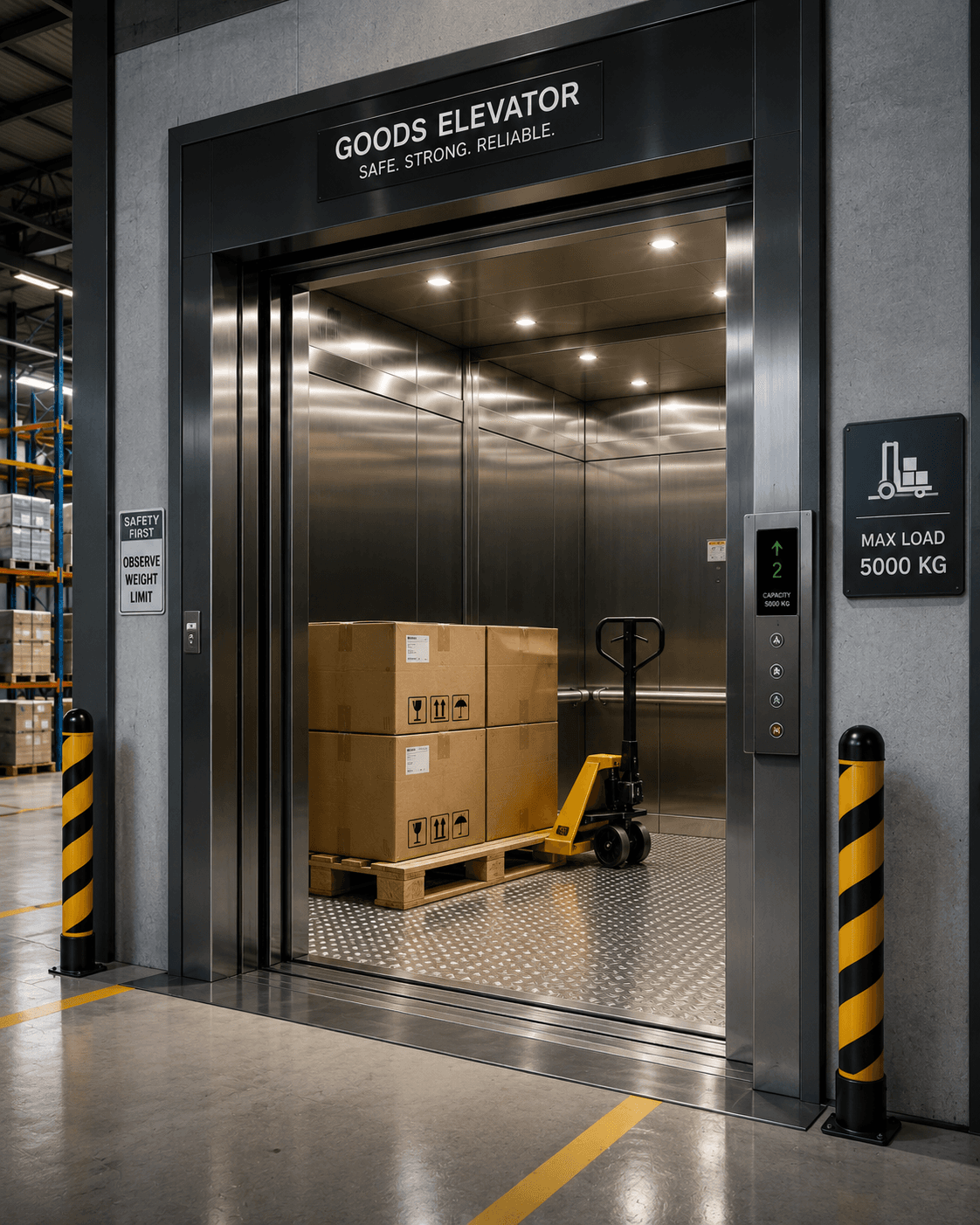
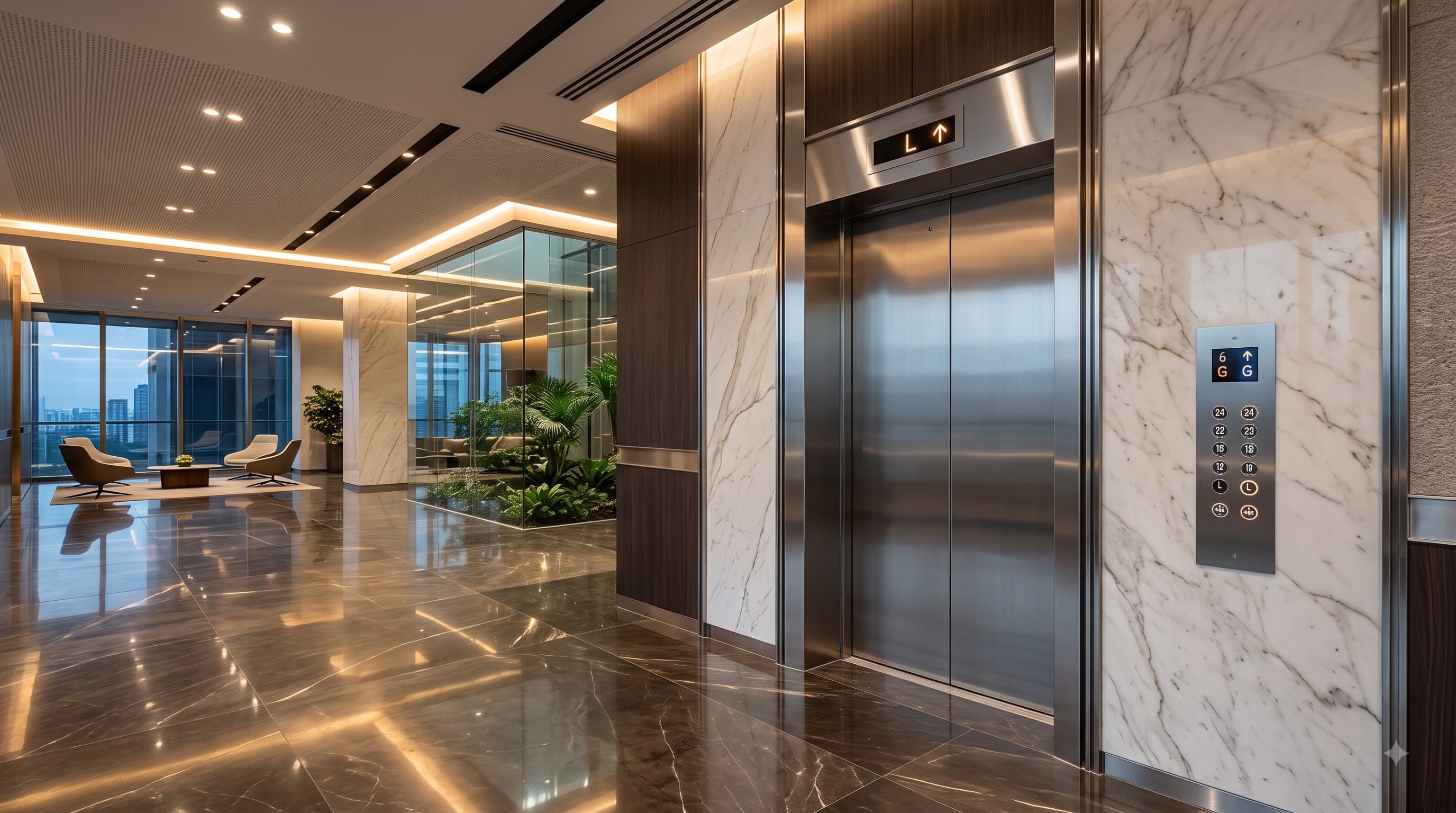
Designed for flexible integration across residential, commercial, institutional, hospitality, healthcare, and industrial environments.
Suitable environments
Versatile project applications
Application
Application
Application
Application
Application
Application
Every installation can be configured according to available space, building usage, passenger flow, load capacity, and architectural requirements.
Every Asco elevator integrates redundant protection systems designed to support passenger safety, emergency response, and reliable operation.
An audible alarm provides immediate assistance during emergency situations.
Battery-powered rescue safely moves the elevator during a power failure.
Infrared sensors prevent the doors from closing when an obstruction is detected.
The elevator remains stationary when the permitted weight limit is exceeded.
Safety Core
Coordinated protection across every journey
Battery-supported cabin lighting remains active during electrical outages.
The elevator automatically returns to the designated floor during a fire alarm.
Unnecessary calls are cancelled when no valid floor selection is detected.
A mechanical governor activates the safety gear if overspeed is detected.
Engineered in accordance with IS 14665 and EN 81 elevator safety requirements.
Select a design module on the left to inspect architectural details, materials, and available finishes.
Crafted structural interiors designed for modern high-rises or luxury residences.
Our structured project management process ensures precise execution, dependable quality, timely delivery, and complete transparency from consultation to handover.
Understanding project requirements, site conditions, design preferences, budget, and delivery expectations.
Our engineering team conducts structural measurements, shaft analysis, and technical feasibility checks.
A customized elevator design is developed with cabin, drive, control, and system specifications.
Elevator components are precisely fabricated, inspected, and assembled at our manufacturing facility.
Certified Asco engineers complete the on-site installation using approved procedures and safety standards.
The complete elevator system undergoes load testing, safety verification, and multi-point quality checks.
The client receives a complete system demonstration, documentation, training, and AMC support details.
Installation completed with verified quality
Every project is tested, documented, demonstrated, and approved before final handover.
Keep your elevator operating safely and efficiently with Asco's professional maintenance, preventive care, and emergency support services.
Comprehensive annual maintenance contracts with scheduled inspections, preventive servicing, performance checks, and priority technical support.
Fast breakdown response with certified technicians dispatched within four hours across the Chennai metropolitan area.
Quarterly maintenance visits covering component inspection, lubrication, adjustment, safety verification, and performance testing.
Round-the-clock emergency support for urgent elevator service requirements and immediate technical assistance.
+91 94452 22331Scheduled servicing helps maintain elevator safety, ride quality, component life, and consistent operating performance.
Everything you need to know about selection, pricing, installation, and maintenance in Chennai and Tamil Nadu.
Asco Elevator India Private Limited is Chennai's leading hydraulic elevator manufacturer, specializing in smooth, powerful lift systems for low-rise buildings up to G+5 floors. Hydraulic elevators use fluid-driven piston technology to move the cabin, offering exceptionally smooth ride quality unmatched by any other elevator type. They are the preferred choice for Chennai homes, clinics, showrooms, and small commercial buildings where machine room space is limited. Our hydraulic lifts feature direct-acting and indirect-acting configurations, require no machine room, offer pit depths as low as 150mm, and provide safe descent during power failures — making them the safest option for residential and light commercial applications.
Hydraulic elevator costs in Chennai range from ₹3.5 lakhs for basic 2-person home models to ₹18 lakhs for 15-person commercial configurations. A standard 6-person hydraulic elevator for a G+3 building costs approximately ₹6–₹8 lakhs installed, including shaft construction and electrical integration. Key cost factors: capacity (2–15 persons), travel height (up to 18 meters), cabin finish (standard stainless steel vs premium glass or wood), door type (manual vs automatic), pit requirements, and installation complexity. Asco hydraulic elevators offer the lowest total cost of ownership among all elevator types due to simpler mechanics and lower maintenance requirements.
Hydraulic elevators excel in low-rise applications (up to G+5) with the smoothest ride quality, lowest pit depth requirements (150mm vs 1200mm for traction), and no machine room needed. Traction elevators are better for mid to high-rise buildings (G+5 to G+20) with higher speeds (up to 3.0 m/s) and better energy efficiency. MRL elevators offer the best space efficiency with no machine room, 30–40% energy savings, and modern aesthetics but require 300–400mm pit depth and cost 15–20% more than hydraulic. For most Chennai homes and small commercial buildings, hydraulic offers the best value-to-performance ratio.
Asco specializes in retrofitting hydraulic elevators into existing Chennai buildings — a critical capability given the city's dense urban fabric. Our no-machine-room hydraulic designs can be installed in as little as 2-3 days with minimal civil work. We manage the complete installation: structural assessment, shaft preparation (or external shaft construction), hydraulic power unit installation, cabin assembly, door integration, control wiring, safety testing, and CMDA compliance certification. Post-installation, we provide comprehensive AMC with 4-hour emergency response across Chennai.
Need expert advice on hydraulic elevator?
Get Free ConsultationExplore detailed technical information, operating principles, performance considerations, and clear answers to common questions about hydraulic elevator systems.
Detailed explanations created to support informed planning, comparison, and specification decisions.
Hydraulic elevators operate on Pascal's principle — fluid pressure applied at one point transfers equally throughout the system. An electric pump motor forces hydraulic fluid (specialized oil) from a reservoir tank into a cylinder, extending a piston that pushes the elevator car upward. For descent, a control valve releases fluid from the cylinder back to the reservoir, allowing the car to descend by gravity. This simple mechanism means: (1) power is consumed only during upward travel, (2) descent requires no electricity (inherently safe during power cuts), (3) the system is self-limiting — the car cannot overspeed downward beyond designed flow rate. Modern hydraulic elevators use telescopic (multi-stage) cylinders for deeper travel, submersible power units for quieter operation, and proportional valves for precise floor-leveling within ±3mm.
Hydraulic elevators have the simplest maintenance requirements among all elevator types. Key maintenance tasks include: monthly inspection of hydraulic fluid level and condition, quarterly check of all seals and hoses for leaks, bi-annual replacement of filter elements and fluid analysis, annual replacement of hydraulic fluid (recommended every 12-18 months), annual testing of all safety devices including rupture valve and check valve. With proper maintenance, hydraulic elevator components last: pump motor — 15–20 years, cylinder and piston — 25+ years, control valves — 10–15 years, hydraulic fluid — replaced annually. Asco's AMC for hydraulic elevators starts at ₹10,000/year for residential models.
Hydraulic elevators incorporate multiple inherent and engineered safety systems. The rupture valve (installed directly on the cylinder) prevents uncontrolled descent if the hydraulic line ruptures — it activates automatically when fluid flow exceeds normal speed. The check valve prevents reverse flow when the pump stops, holding the car at floor level. Manual lowering valves allow firefighters to safely lower the car during emergencies. Overspeed governors and safety gears provide backup mechanical braking. Buffer springs at the pit bottom provide final protection. These multiple redundant systems make hydraulic elevators statistically the safest elevator type for low-rise applications.
Select a question to reveal a concise technical answer about your hydraulic elevator.
These answers address common installation, performance, safety, maintenance, and specification questions related to hydraulic elevator systems.
Standard hydraulic elevators can serve up to G+5 floors with approximately 18 meters of travel height. For heights beyond 18 meters, telescopic (multi-stage) cylinders can extend travel to 25 meters, but traction or MRL elevators are generally more economical above 18 meters.
Need guidance for a specific building? Asco's technical team can review your capacity, shaft dimensions, travel height, safety, and installation requirements.
Asco provides professional hydraulic elevator installation, modernization, maintenance, and AMC services across major Chennai zones.
Speak with our elevator specialists to discuss your shaft, capacity, design, installation timeline, and maintenance requirements.
Explore helpful information about hydraulic elevator pricing, design, installation, safety, maintenance, customization, and after-sales support.
Need guidance for your project?
Discuss your building specifications with an Asco Elevator specialist.
Expert answers
Project-focused guidance
Installation and AMC support
Get a free site survey, technical recommendation, and transparent quotation. Our team responds within 24 hours.